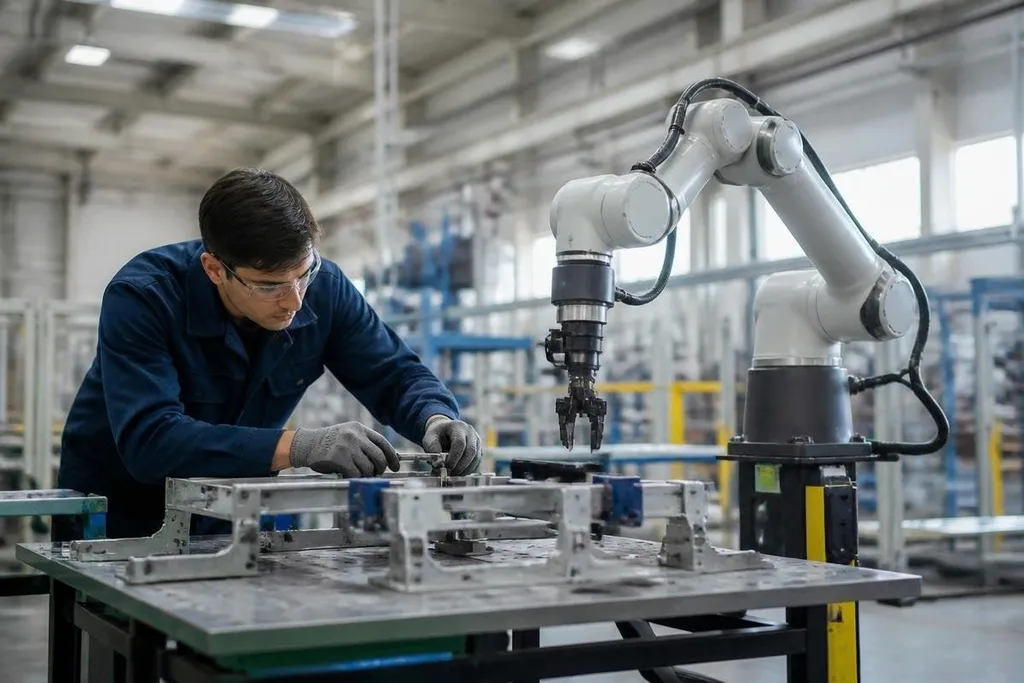
A robot can repeat a weld, inspection, or material move for hours. It still needs someone to set the task, check the result, and fix the system when the work changes. That makes robots part of the answer to skilled labor shortages, not a substitute for skilled people.
- Repetitive tasks are the easiest place to start.
- Setup, repair, and safety work still need trained staff.
- A robot project fails when the task changes too often.
Where robots can help
Robots work best when the job has clear steps, fixed tools, and parts that arrive in known positions.
Robot arms can move a part, weld along a set path, or load a machine. Mobile robots can carry materials between work areas if their route stays clear and their sensors can read the space.
That can free skilled workers from repeated motions. A machinist could spend more time checking tool wear and handling unusual parts. A maintenance technician could focus on faults that need judgment instead of walking materials across a building.
The task matters more than the robot’s shape. A six-axis arm, a mobile platform, and a vision system solve different problems. Each needs a clear job, a safe work area, and a way to measure whether the result is good enough.
The work robots still need
Automation moves some skill requirements rather than removing them. Someone must choose the tool, set the robot’s path, connect sensors, and test the safety system. That work calls for mechanical, electrical, software, or process knowledge.
Training matters here. A worker who knows the production line may learn to adjust robot positions and spot a bad cycle faster than a new hire who knows the robot but not the process. The strongest setup pairs machine skills with knowledge of the job being automated.
Maintenance creates another limit. Motors wear out. Cameras get dirty. Parts shift in a fixture. A system that worked well on Monday may stop when a supplier changes a box or a new part arrives. It needs people who can find the cause and make a safe change.
This is why a robot rarely fills an open skilled role on its own. It changes the work around that role, and it can create new technical jobs in the same facility.
The cost is more than the robot
The purchase price covers only part of the project. You may also need grippers, cameras, guarding, software, installation, staff training, and changes to the floor or production line. The work may stop during setup, which adds a cost that a product sheet will not show.
A system also needs enough repeatable work to justify the change. If staff spend much of each shift feeding parts, clearing faults, or waiting for a technician, the expected gain shrinks. A short trial with one task can reveal those problems before a larger purchase.
Those trial results need a wider reference point before you judge the labor savings. Dated robotics coverage from Robot24.com can help you compare a robot’s claimed task with its reported work setting, limits, and human handoff. That comparison matters when the full system faces new parts, new shifts, and normal faults.
The open question is not whether a robot can perform one task. It is whether the full system keeps working after new parts, new shifts, and normal faults enter the picture.
A practical buying checklist
Use these checks before treating a robot as the answer to a staffing gap:
- Name the task: Write down the repeated motion, tool, part, and expected result.
- Count the human work: Record setup, loading, fault recovery, inspection, and cleaning time.
- Check the changes: List how often parts, packaging, tools, or product designs change.
- Plan the skills: Assign people to programming, maintenance, safety checks, and process review.
- Run a small trial: Test one task long enough to include routine faults and a normal shift pattern.
If the job changes every few minutes, needs delicate judgment, or has poor input quality, training may help more than a robot. If the job repeats with few changes, automation has a clearer case.
I’d back robots as a way to reduce repeated work and help skilled staff cover more output. The labor shortage remains when nobody is trained to run, repair, and improve the machines, so the next hire may need a control panel beside the old workbench.